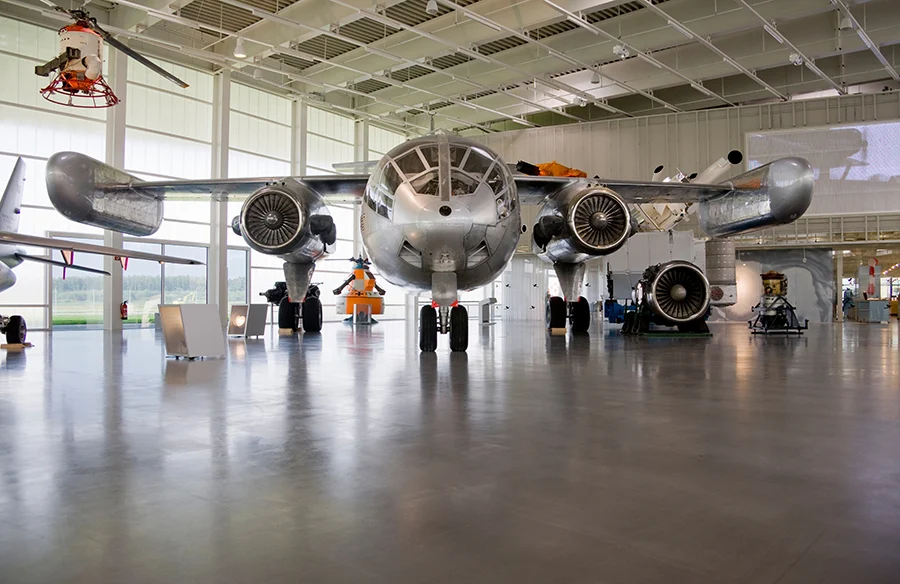
Military aviation has developed through more than a century of experimentation, engineering, conflict, and technological change. From fragile early aircraft to sophisticated modern jets, every generation of military flying machines reflects the priorities and capabilities of its period. Building miniature aircraft provides an engaging way to explore this history because it transforms historical subjects into physical projects that can be studied closely. Instead of simply reading about an aircraft, builders can examine its proportions, markings, structural features, and purpose while recreating it piece by piece.
Starting With The Early Years Of Military Flight
The early twentieth century offers an interesting starting point for anyone exploring aviation history. Aircraft were initially used mainly for observation and reconnaissance, but their military roles expanded rapidly. Fighters, bombers, and specialised aircraft soon appeared as designers responded to changing requirements.
Building models inspired by these early machines highlights just how different their construction was from later aircraft. Open cockpits, exposed engines, fabric-covered surfaces, wooden structures, and multiple wings were common. Recreating these characteristics encourages builders to investigate why early designers made particular choices and how quickly aviation engineering progressed.
For people interested in historically focused Hobbies.co.uk/">Hobbies, aircraft building can combine practical craftsmanship with research. A builder may begin by investigating a particular aircraft and eventually discover the pilots, squadrons, manufacturers, airfields, and historical events associated with it.
Understanding How Aircraft Roles Changed
Military aircraft were rarely designed simply to fly faster or higher. They were created to perform specific jobs. Fighters needed manoeuvrability and speed, bombers required range and carrying capacity, reconnaissance aircraft prioritised observation, and transport aircraft had entirely different requirements.
These differences become much clearer when several models are viewed together. Comparing aircraft from the same period can reveal contrasting wing shapes, fuselage dimensions, engine arrangements, and defensive features. A collection therefore becomes more than a row of attractive miniatures. It might act as a visual documentation of evolving military requirements.
The same appreciation for miniature detail can be found in Dolls Houses, where small architectural and interior elements help recreate another place or period. Aircraft modelling applies a similar principle to aviation, using carefully reproduced details to communicate historical character on a reduced scale.
Seeing Technological Progress Up Close
The Second World War accelerated aircraft development dramatically. Comparing aircraft from the beginning and end of the conflict demonstrates how rapidly engineering changed. Improvements appeared in engines, aerodynamics, armament, navigation, communications, and aircraft construction.
Model building makes these developments physically visible. A builder can compare landing gear arrangements, propeller configurations, cockpit positions, wing profiles, and engine placement without relying solely on written descriptions.
This is where Model Aircraft can become particularly valuable for aviation enthusiasts. Constructing aircraft from different years creates a tangible timeline showing how designers responded to technological opportunities and operational demands.
Exploring The Arrival Of The Jet Age
The emergence of jet propulsion represents one of the biggest turning points in military aviation. Aircraft silhouettes began changing as designers moved away from many conventions associated with piston-powered machines.
Swept wings, new intake arrangements, pressurised cockpits, increasingly sophisticated electronics, and different fuselage profiles became prominent. Building aircraft from the early jet era alongside later Cold War designs helps demonstrate that this transformation did not happen all at once.
Each generation introduced solutions to different challenges. Studying models closely can encourage questions about why certain shapes became common and why some experimental concepts disappeared.
Learning Through Authentic Markings
Paint schemes and markings add another historical dimension. Military aircraft often carried national insignia, identification numbers, squadron symbols, camouflage patterns, and other markings associated with particular units or periods.
Researching these details can lead builders beyond the aircraft itself. A specific set of markings may connect a model with a particular squadron, campaign, pilot, or geographic region. Even differences in camouflage can reveal information about the conditions in which an aircraft operated.
Accuracy does not have to mean perfection. The process of researching markings and understanding their purpose is itself an opportunity to learn.
Building A Collection As A Historical Timeline
Rather than choosing aircraft randomly, enthusiasts can organise projects around a historical theme. One collection might trace fighter development from early biplanes through piston-powered monoplanes and into jet aircraft. Another might concentrate on reconnaissance aircraft, naval aviation, transport planes, or a specific historical period.
Displaying models chronologically makes technological changes immediately noticeable. Differences that might seem abstract in a book become easy to recognise when aircraft are positioned beside one another.
Combining Research With Practical Craftsmanship
Perhaps the greatest strength of aircraft building as a historical activity is the combination of learning and making. Builders practice assembly, painting, finishing, and attention to detail while simultaneously developing a deeper understanding of aviation.
Every completed aircraft can represent a small chapter of a much larger story. As a collection expands, it can illustrate changing technologies, military requirements, engineering philosophies, and design priorities across decades. Through careful building and historical curiosity, miniature aircraft provide an accessible and rewarding way to explore how military aviation evolved from its earliest experiments into the sophisticated aircraft of the modern era.