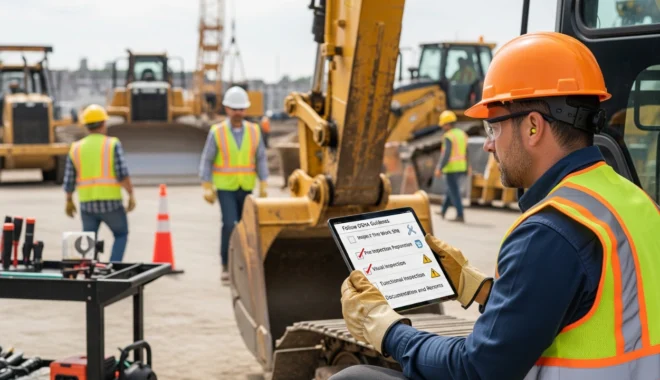
Purchasing construction equipment is a big choice for any business or contractor. Whether you’re expanding your fleet or replacing outdated machinery, the process requires careful evaluation to avoid costly mistakes. New or used, construction equipment for sale must be inspected thoroughly before purchase to ensure safety, reliability, and value for money. Here’s a straightforward checklist to guide your inspection process before committing to a purchase.
1. Visual Inspection Of The Exterior
A comprehensive visual investigation is the first stage. Look for obvious indications of damage, such as rust, fractures, dents, or welding marks, on the equipment’s body. Surface issues may indicate prior accidents or poor maintenance, especially if the repairs look unprofessional or improvised.
Pay close attention to the chassis, undercarriage, arms, and attachments. Look for any indications of stress or structural damage that can jeopardize functionality or safety. While some wear and tear is expected in used equipment, excessive damage should raise red flags.
2. Inspect The Engine And Components
Any construction machine’s engine is its fundamental component. Begin by checking for leaks—oil, coolant, or fuel around the engine compartment is a major concern. Next, inspect the fluid levels and the condition of the fluids themselves. Dirty or burnt oil may indicate poor maintenance.
Turn on the engine and see how it operates. A healthy engine should start smoothly, without unusual noises or excessive smoke. Pay attention to vibrations, engine idle speed, and any error codes on digital displays. If the engine hesitates or produces knocking sounds, it may require costly repairs.
3. Evaluate Hydraulic Systems
Hydraulic systems power many functions in construction equipment, from lifting arms to attachments. Inspect the hydraulic lines and cylinders for leaks or damage. Look for cracked hoses, worn fittings, or fluid residue around joints.
Operate the hydraulic components to assess responsiveness and power. Jerky or sluggish movements may indicate air in the system, contamination, or worn-out components. Replacing hydraulic parts can be expensive, so it’s crucial to evaluate them carefully before purchase.
4. Test Operational Functions
All operational features of the machine should be tested in real working conditions. This includes lifting mechanisms, booms, buckets, tracks or tires, and auxiliary controls. Watch for proper movement, alignment, and speed.
Ensure the operator’s controls respond precisely and intuitively. Faulty controls can reduce efficiency and pose safety risks. Test all gears, brakes, steering, and drive systems thoroughly. If the machine doesn’t perform as expected, it may be a sign of deeper mechanical issues.
5. Check The Tires, Tracks, And Undercarriage
Tires and tracks endure the harshest wear on construction equipment. Inspect tires for cracks, bulges, or uneven tread wear, which could signal misalignment or suspension problems. On tracked equipment, examine the condition of the track links, rollers, sprockets, and tensioners.
The undercarriage can be expensive to repair or replace. Check for excessive wear or loose parts that could affect performance or stability. A well-maintained undercarriage is a strong indicator of overall equipment care.
6. Review Maintenance And Service Records
Reliable maintenance records are invaluable when buying used construction equipment. Request detailed service logs to see how often the equipment was serviced and what repairs were performed. Well-documented maintenance suggests the machine was properly cared for and may have a longer remaining lifespan.
Be wary of equipment with missing or incomplete records, as it becomes difficult to verify its history. Also, check for recalls or manufacturer bulletins related to the model you’re inspecting.
7. Verify Hours Of Use And Machine History
The number of hours a machine has been used directly affects its value and lifespan. Compare the hours logged on the meter with the physical condition of the equipment. If the machine appears heavily worn but shows low hours, it could be a sign of odometer tampering.
It’s also wise to request a machine history report if available. This can provide details on ownership, accident history, and whether the machine was involved in any insurance claims or repossessions.
8. Inspect The Cab And Electronics
A functional and comfortable cab is essential for operator safety and efficiency. Examine the visibility from the cab, the pedals, and the seat. Test the functionality of switches, gauges, lights, wipers, air conditioning, and any electronic display systems.
Modern construction equipment often features digital diagnostics and sensors. Make sure there are no warning lights on and that these systems are operating as intended. Faulty electronics can be difficult and expensive to troubleshoot and repair.
9. Assess Attachments And Compatibility
If the machine comes with attachments such as buckets, augers, or grapples, inspect them as closely as the machine itself. Look for damage, rust, or wear that could affect performance. Also, confirm that the attachments are compatible with the equipment and meet your operational needs.
Make sure that hydraulic couplers, quick-attach systems, and other accessory interfaces are functioning properly. Replacing or repairing attachments can add unforeseen costs to your investment.
10. Conduct A Professional Inspection (If Necessary)
If you’re not confident in your ability to inspect the equipment yourself, hire a professional or certified mechanic to conduct a detailed inspection. They can identify hidden issues and provide an unbiased opinion about the machine’s condition.
An independent inspection might come at a cost, but it’s a worthwhile investment for high-value purchases, especially when buying used equipment from unfamiliar sources.
Conclusion
Inspecting construction equipment before purchase is a critical step that can save you from financial loss, project delays, and safety hazards. By following this checklist, you’ll be better equipped to make an informed decision and ensure the machinery you’re investing in will serve your operational needs reliably and efficiently. Whether you’re buying brand-new equipment or a second-hand unit, never rush the inspection process. A careful evaluation today can protect your bottom line tomorrow.